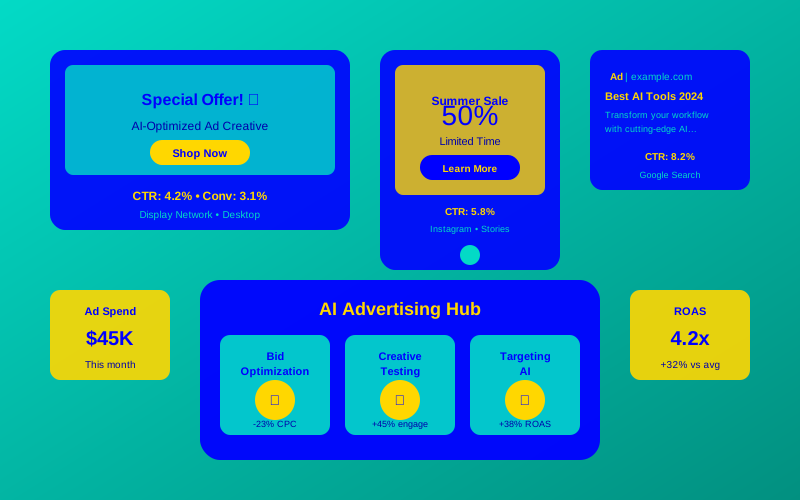
According to WordStream research, advertisers using AI bidding strategies see 20-30% better performance than manual bidding. Here's how to leverage AI for advertising.
Google's Smart Bidding uses machine learning to optimize bids in real-time for every auction. It considers signals you can't access manually: device, location, time of day, and user behavior.
Smart Bidding strategies:
Target CPA: Maximize conversions at your target cost per acquisition
Target ROAS: Optimize for return on ad spend
Maximize Conversions: Get the most conversions within budget
Performance Max: AI-powered campaigns across all Google surfaces
"Switching to Target ROAS bidding improved our return from 3x to 5.2x. The AI finds conversions we were missing with manual bidding."
— E-commerce Marketing Director
Albert AI: Autonomous Advertising
Albert AI runs campaigns autonomously across Google, Meta, and other platforms. Per AdExchanger, it's used by brands like Harley-Davidson and Cosabella for autonomous optimization.
Average improvements reported by professionals using AI tools in this category
Implementation Strategy
Adopting AI tools successfully requires a structured approach. Don't try to transform everything at once. Start small, measure results, and expand gradually.
Identify high-impact tasks: Start with the most time-consuming repetitive tasks in your workflow.
Choose one tool: Don't evaluate five tools simultaneously. Pick the best fit for your primary need.
Run a pilot: Test with a small project or team for 2-4 weeks before rolling out broadly.
Measure outcomes: Track time savings, quality improvements, and user satisfaction.
Iterate and expand: Based on pilot results, refine your workflow and add new use cases.
☐ Current workflow bottlenecks identified
☐ Tool selected based on requirements
☐ Pilot project planned with clear success metrics
☐ Team trained on basic tool usage
☐ Review process established for AI outputs
☐ Expansion plan drafted for post-pilot rollout
Best Practices
Do This
Avoid This
Why It Matters
Start with one clear use case
Try to automate everything at once
Focused adoption builds confidence and skills
Always review AI outputs
Trust AI blindly
AI is powerful but imperfect — human oversight is essential
Measure before and after
Assume improvements
Data-driven adoption ensures real value
Train your team gradually
Mandate instant adoption
Gradual training builds lasting habits
"The organizations seeing the biggest returns from AI aren't the ones with the biggest budgets. They're the ones with the clearest implementation plans."
— McKinsey Digital Report, 2024
Getting Started Today
AI tools for ai advertising tools are mature, affordable, and proven. The gap between early adopters and holdouts is growing every month. The best time to start is now — and the best approach is to start small, measure everything, and build from there.
AI advertisingad optimizationdigital adsPPCad targeting
Frequently Asked Questions
AI handles tactical work: bidding, audience testing, and optimization. Media buyers still provide strategy, creative direction, and budget allocation. AI makes them more effective, not obsolete.