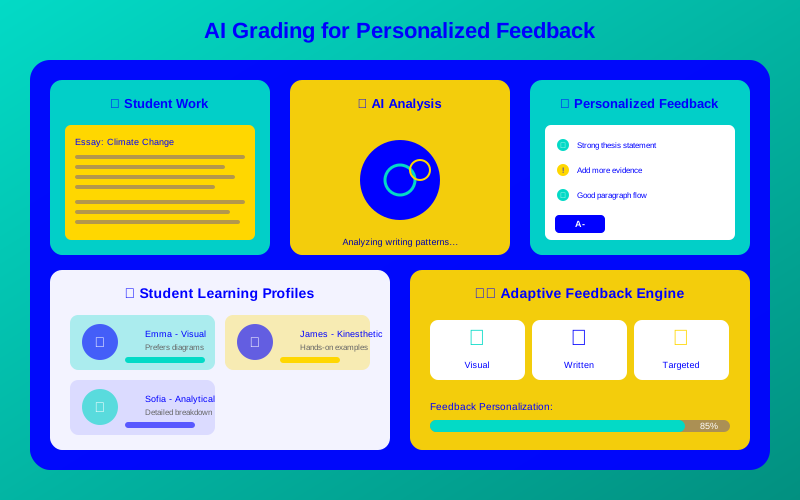
A grade without feedback is just a number. Research from John Hattie's Visible Learning shows that feedback has an effect size of 0.70—nearly double what's considered educationally significant. But quality feedback takes time. AI changes that equation.
AI grading tools don't just score work faster. They generate the personalized, actionable feedback that actually helps students improve. The kind of feedback you'd write if you had unlimited time.
What You Will Learn:
The best AI tools for generating personalized feedback
How to maintain your voice while using AI assistance
Strategies for different types of assignments
Real examples of effective AI-generated feedback
Why Personalized Feedback Changes Everything
Generic comments like "good job" or "needs work" don't help students improve. They need to know exactly what they did well and specifically what to do differently. According to Edutopia research, effective feedback is timely, specific, and actionable.
The problem: writing that kind of feedback for 120+ students takes impossible amounts of time. Teachers face a choice between thorough feedback and grading everything before next week.
AI eliminates that tradeoff. It generates detailed, personalized comments in seconds. You review, adjust, and add your voice. Students get better feedback faster.
"I used to write two sentences of feedback per essay because that's all I had time for. Now AI drafts a paragraph of specific suggestions, and I customize it. My students improve faster, and I'm not grading until midnight."
Brisk Teaching: Instant Feedback on Any Assignment
Brisk Teaching is a Chrome extension that generates feedback wherever you work. Open a student's Google Doc, highlight their work, and Brisk creates personalized comments. It identifies strengths, areas for improvement, and specific next steps.
The AI adapts tone based on your preferences—encouraging for younger students, more direct for high schoolers. You can set it to focus on specific skills (thesis development, evidence use, organization) or give comprehensive feedback.
What makes it special:
Works inside Google Docs, Canvas, and any web-based platform
Generates feedback aligned to your rubric
Adjustable tone and focus areas
Tracks which students received feedback
Grammarly for Education: Real-Time Writing Support
Grammarly for Education gives students feedback as they write, not after submission. The AI catches grammar, spelling, clarity, and style issues in real-time.
For teachers, this means students submit cleaner drafts. You spend less time on mechanics and more on content and ideas. The teacher dashboard shows class-wide patterns—if everyone struggles with comma splices, you know what to teach.
"Your thesis clearly states your argument about climate change policy. To strengthen it, consider addressing the counterargument about economic costs within the thesis itself."
"Needs more evidence."
"Your second paragraph argues that electric vehicles reduce emissions, but lacks supporting data. Consider adding a statistic from a credible source like the EPA or a peer-reviewed study."
"Awkward phrasing."
"The sentence 'The reason why because it happened' has redundant wording. Try: 'This happened because...' for clearer expression."
The difference: specific, actionable, and tied to improvement. That's what AI enables at scale.
When professionals report breaking even on AI tool investment
Step-by-Step Implementation
Audit your current workflow: Map where you spend time and identify bottlenecks.
Select the right tool: Match your biggest pain point to a tool's core strength.
Start small: Run a 2-week pilot on one project or task type.
Measure and compare: Compare pilot results to your pre-AI baseline.
Scale what works: Expand successful workflows to your full workload.
☐ Workflow bottlenecks identified and prioritized
☐ Tool selected and trial account created
☐ Pilot project and timeline defined
☐ Success metrics established
☐ Team onboarding plan in place
☐ Post-pilot review date scheduled
Take Action This Week
The gap between AI-enabled teachers professionals and those using traditional methods is growing every quarter. Don't wait for the perfect moment — start with one tool, one task, and one week of focused experimentation.
Yes. Modern AI analyzes writing patterns, identifies strengths and weaknesses, and generates specific improvement suggestions. The feedback is often more detailed than time-pressed teachers can provide manually.