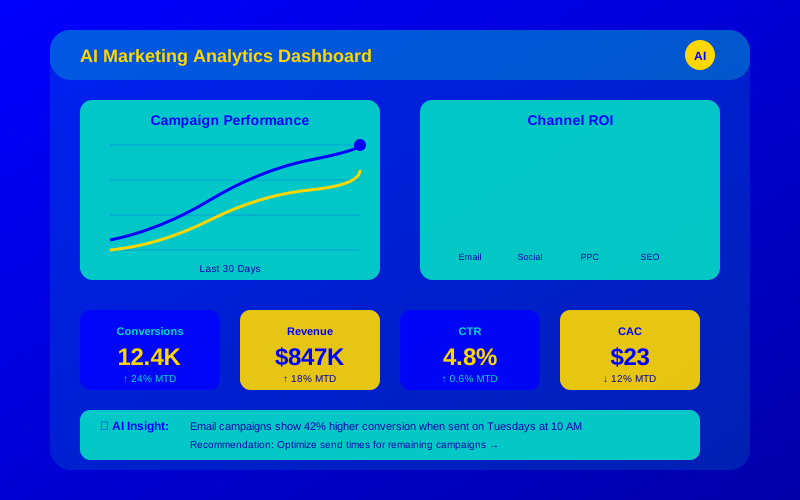
Are you struggling to make sense of your marketing data? Feeling overwhelmed by numbers and unsure how to improve your campaigns? The AI marketing analytics guide is here to help! By using artificial intelligence, you can turn confusing data into clear, actionable insights to grow your business.
This article will teach you 15 must-know strategies for using AI in marketing analytics in 2025. You’ll learn how to understand customer behavior, optimize campaigns, and increase your return on investment (ROI).
What Is AI Marketing Analytics?
AI marketing analytics is like having a super-smart assistant who can quickly analyze tons of data. It uses artificial intelligence to study customer behavior, predict trends, and suggest the best ways to improve your marketing. Imagine a librarian who instantly finds the perfect book in a giant library—that’s what AI does with your data!
For example, AI can look at website visits, social media likes, and sales to tell you what’s working and what’s not. This helps businesses make smarter decisions.
“AI marketing analytics allows brands to understand customers at a deeper level, turning raw data into actionable strategies.”
— HubSpot, 2025 Marketing Trends Report
Why Use AI-Powered Analytics Strategies in 2025?
AI-powered analytics strategies are a game-changer because they save time and make your marketing more effective. Instead of guessing what customers want, AI uses data to show you exactly what they like. This leads to better campaigns and higher ROI.
Here’s why it’s important:
- Speed: AI processes data faster than humans.
- Accuracy: It spots patterns you might miss.
- Personalization: AI tailors campaigns to individual customers.
For instance, a clothing brand can use AI to see which colors customers prefer, then create ads for those specific products.
15 Must-Know AI Marketing Analytics Strategies for 2025

Let’s dive into the 15 strategies that will help you succeed with AI in 2025. Each one is simple, practical, and designed to solve real marketing problems.
1. Use Customer Behavior Analytics AI to Understand Your Audience
Customer behavior analytics AI studies how people interact with your brand. It looks at clicks, purchases, and even time spent on your website. This helps you know what customers love.
Example: If your online store sees more clicks on sneakers than boots, AI can suggest promoting sneakers more.
2. Predict Trends with 2025 Analytics Trends
AI can predict what customers will want next by analyzing past data. This is part of 2025 analytics trends, where businesses stay ahead of the competition.
Example: A coffee shop might use AI to predict that pumpkin spice lattes will be popular in fall, so they stock up early.
3. Optimize Campaigns with Campaign Optimization AI
Campaign optimization AI tweaks your ads in real-time to get better results. It tests different headlines, images, or audiences to find what works best.
Example: If your ad isn’t getting clicks, AI might change the image to a brighter one that grabs attention.
“Campaign optimization AI can increase ad performance by up to 30% by making real-time adjustments.
— Salesforce, 2025 AI Marketing Insights
4. Boost ROI with Marketing ROI with AI
AI helps you get more bang for your buck by focusing on high-value customers. It identifies who’s most likely to buy and targets them with ads.
Example: A gym might use AI to target people who’ve searched for fitness classes, increasing sign-ups.
5. Personalize Ads with Advanced Marketing Tools
Advanced marketing tools use AI to create ads that feel personal. They analyze customer preferences to show ads that match their interests.
Example: If someone loves sci-fi books, AI can show them ads for the latest space adventure novel.
6. Segment Audiences for Better Targeting
AI groups your customers into segments based on their behavior, like age, interests, or buying habits. This makes your campaigns more relevant.
Example: A toy store can send different ads to parents of toddlers versus teens.
7. Automate Reporting for Faster Insights
AI can create reports in seconds, saving you hours of work. It summarizes key data points, like sales or website traffic.
Example: A bakery can get a weekly AI report showing which pastries sold best.
8. Use Natural Language Processing for Social Media
AI tools with natural language processing (NLP) analyze social media comments to understand customer feelings. This helps you respond better.
Example: If customers complain about slow delivery, AI alerts you to fix it.
9. Track Competitor Performance
AI can monitor your competitors’ ads and strategies. This helps you stay one step ahead.
Example: If a rival launches a big sale, AI can suggest matching their offer.
10. Improve Email Marketing with AI
AI optimizes email campaigns by suggesting the best send times and subject lines.
Example: AI might find that sending emails on Tuesday mornings gets more opens.
11. Use Predictive Analytics for Inventory
AI predicts how much stock you’ll need based on sales trends. This prevents overstocking or running out.
Example: A phone store can stock more iPhones before a big launch.
12. Analyze Video Engagement
AI tracks how people watch your videos, like which parts they skip. This helps you make better content.
Example: If viewers drop off after 10 seconds, AI suggests making shorter videos.
13. Enhance SEO with AI Tools
AI improves your website’s search engine ranking by suggesting keywords and content ideas.
Example: AI might recommend adding “best running shoes” to your blog to attract more clicks.
14. Detect Fraud in Ad Campaigns
AI spots fake clicks or suspicious activity in your ads, saving you money.
Example: If bots are clicking your ads, AI can block them.
15. Measure Customer Lifetime Value
AI calculates how much a customer will spend over time, helping you focus on loyal buyers.
Example: A coffee chain can offer discounts to customers who buy daily.
“AI-driven insights into customer lifetime value can boost retention rates by 25%.”
— McKinsey, 2025 Marketing Report
How to Use AI in Marketing: A Step-by-Step Guide
Ready to start using AI marketing analytics? Follow these simple steps:
- Choose an AI Tool: Pick a tool like HubSpot, Salesforce, or Google Analytics 4.
- Connect Your Data: Link your website, social media, and sales data to the tool.
- Set Goals: Decide what you want to improve, like more sales or better ads.
- Analyze Insights: Let the AI show you patterns and suggestions.
- Act on Recommendations: Update your campaigns based on AI’s advice.
Example: A pet store might connect its website to an AI tool, set a goal to increase dog food sales, and use AI’s suggestion to target dog owners with special offers.
Choosing the Best AI Marketing Analytics Tools
Here’s a table to help you pick the right tool for your needs.
| Tool Name | Key Feature | Best For | Price | ROI | Cons/Issues |
|---|---|---|---|---|---|
| HubSpot | Customer behavior analytics AI | Small businesses | $20-$1,200/month | High | Can be pricey |
| Salesforce | Campaign optimization AI | Large teams | $25-$500/month | High | Complex setup |
| Google Analytics 4 | Free AI insights | Beginners | Free | Medium | Limited features |
| Hootsuite Insights | Social media NLP | Social media managers | $49-$739/month | Medium | Slow support |
| Adobe Analytics | Advanced marketing tools | Enterprises | Custom pricing | High | Steep learning curve |
This table helps you compare tools based on your budget and goals.
Benefits of AI Analytics in 2025
Using AI analytics in 2025 offers huge advantages:
- Save Time: Automate tasks like reporting and data analysis.
- Increase Sales: Target the right customers with personalized ads.
- Stay Ahead: Predict trends and beat competitors.
For example, a small bakery used AI to target local customers with ads for fresh bread, boosting sales by 20%.
The future of marketing lies in AI’s ability to deliver personalized experiences at scale.
— Forrester Research, 2025 Analytics Forecast
Growth of AI in Marketing Analytics (2023-2025)
Here’s a chart showing how AI adoption in marketing analytics has grown.
This line chart shows AI adoption growing from 30% in 2023 to 75% in 2025, based on industry reports.
Simple AI Marketing Analytics Script
Here’s a basic Python script to analyze customer data using AI-like logic. It groups customers by purchase amount.
customers = [
{"name": "Alice", "purchases": 150},
{"name": "Bob", "purchases": 50},
{"name": "Charlie", "purchases": 200}
]
def segment_customers(data):
high_value = []
low_value = []
for customer in data:
if customer["purchases"] > 100:
high_value.append(customer["name"])
else:
low_value.append(customer["name"])
return high_value, low_value
high, low = segment_customers(customers)
print("High-Value Customers:", high)
print("Low-Value Customers:", low)
This script sorts customers into high-value and low-value groups, helping you target them better.
Looking Ahead: Mastering AI Marketing Analytics in 2025
So, what’s the bottom line? AI marketing analytics is your key to smarter, faster, and more effective marketing in 2025. By using these 15 strategies, you can understand your customers, optimize campaigns, and boost ROI. Start small with one tool, test it, and watch your results soar!
Frequently Asked Questions (FAQs)
What Is AI Marketing Analytics?
AI marketing analytics uses artificial intelligence to analyze data and improve marketing decisions. It’s like a super-smart calculator for your campaigns!
How Do I Start Using AI in Marketing?
Pick a tool like HubSpot, connect your data, and follow AI’s suggestions to improve your ads or emails.
What Are the Benefits of AI Analytics?
AI saves time, increases sales, and helps you create personalized campaigns that customers love.
Which AI Tools Are Best for Marketing in 2025?
HubSpot, Salesforce, and Google Analytics 4 are great choices, depending on your budget and needs.
Can AI Really Improve My Marketing ROI?
Yes! AI targets high-value customers and optimizes campaigns, often boosting ROI by 20-30%, according to industry reports.