AI Medical Research Technology: 6 Game-Changing Powers Unlocking Medical Mysteries in 2025

Wonder how AI medical research tools work? Dive into 6 cutting-edge technologies ensuring scientific precision.

0

Shares

76

Reads

Highlights

  • How machine learning acts like a clever detective in labs.
  • Why natural language processing (NLP) for <a href="https://aitooljournal.com/ai-in-medical-research-guide/" title="AI in Medical Research Guide: 15 Smart Strategies for 2025" data-wpil-monitor-id="1236">medical studies is your instant research</a> buddy.
  • The scoop on how <a href="https://aitooljournal.com/ai-tools-directory/epic-ai-review/" title="Epic Review: Transforming Health Care with AI-Powered EHR Solutions" data-wpil-monitor-id="1237">health AI works through predictive analytics</a>.
  • Tips on AI data monitoring to keep experiments on track.
  • Secrets of automated hypothesis generation for wild new ideas.
  • <a href="https://aitooljournal.com/benefits-of-ai-in-patient-care/" title="Benefits of AI in Patient Care: 7 Powerful Ways AI is Revolutionizing the Patient Experience" data-wpil-monitor-id="1238">Ways big data in healthcare</a> turns info overload into gold.
ai medical research technology

AI medical research technology helps spots diseases before they start and helps find new drugs super fast. But what’s inside that “magic box”? The pain? It feels like a mystery you can’t crack, slowing down your big ideas. Today, we bust that open. You’ll see exactly how these tools work, step by step. No more black box blues!

What Is AI Medical Research Technology?

AI medical research technology is like a team of robot helpers. They use computer brains to sift through huge piles of info – think patient records, lab results, and science papers. Instead of guessing, they spot patterns humans might miss.

Picture it as a master chef in a giant kitchen. The chef (AI) tastes every ingredient (data) and whips up recipes (discoveries) way quicker than you could alone. In 2025, these tools cut drug discovery time from years to months. No more staring at screens wondering “How does this even work?” Let’s dive in.

Comparing the 6 Key AI Medical Research Technologies

Want to pick the right one fast? This table breaks it down. It helps you decide which tech fits your next experiment.

Technology NameKey FeatureBest ForImpact in 2025Cons/Issues
Machine Learning in ResearchLearns patterns from data examplesSpotting disease trendsSpeeds analysis by 10xNeeds lots of clean data
NLP for Medical StudiesReads and sums up text like a proReviewing papers and notesHandles 6.5M+ downloads yearlyStruggles with slang or errors
Predictive Analytics in MedicineGuesses future outcomes from trendsForecasting outbreaksBoosts revenue 81% for usersCan miss rare events
AI Data MonitoringWatches data streams in real timeTracking trial safetyCuts errors by 73%Privacy risks if not secured
Automated Hypothesis GenerationSuggests new ideas from patternsBrainstorming experimentsShortens R&D by 41%Ideas need human check
Big Data in HealthcareManages massive info floodsLinking global health recordsGrows market to $600BOverwhelms slow computers

So, what’s the bottom line? Start with machine learning if you’re new. It builds a strong base.

Machine Learning in Research: Your Data-Detective Sidekick

Machine learning in research is like training a puppy to fetch the right ball. Feed it examples of “sick” vs. “healthy” cells. Over time, it spots illnesses on its own.

Here’s the deal: It crunches numbers to learn rules. No hand-coding needed. In real life? Imagine feeding it X-ray images of lungs. It flags pneumonia early, saving lives in clinics.

“Eventually, doctors will adopt AI and algorithms as their work partners.” – Eric Topol, cardiologist and AI expert.

Check NVIDIA’s guide for more: They speed this up with GPUs, turning hours into minutes. Think of it this way: Your lab gets a turbo boost.

Quick Code Example (Python – Super Simple!) Want to try? Here’s basic code using scikit-learn to classify heart data. (Grab a free dataset like UCI Heart Disease online.)

from sklearn.model_selection import train_test_split
from sklearn.tree import DecisionTreeClassifier
import pandas as pd

# Load your data (like age, cholesterol levels)
data = pd.read_csv('heart_data.csv')
X = data[['age', 'cholesterol']]  # Features
y = data['has_disease']  # Target

# Split and train
X_train, X_test, y_train, y_test = train_test_split(X, y, test_size=0.2)
model = DecisionTreeClassifier()
model.fit(X_train, y_train)

# Predict!
prediction = model.predict([[50, 200]])  # For a 50-year-old with cholesterol 200
print("Risky? ", prediction)

Run this in a notebook. Boom – your first ML medical check!

Natural Language Processing (NLP) for Medical Studies: The Super Reader

Natural language processing for medical studies is your tireless librarian. It scans thousands of papers and pulls key facts, like “This drug works best on kids under 10.”

How health AI works here? It breaks words into math bits, then links ideas. Real-world win: Doctors query “Best treatment for rare flu?” and get summaries in seconds.

“NLP will revolutionise healthcare and life sciences, simplify data analysis, and ultimately transform patient care.” – Industry experts at Fast Data Science.

Yale’s bio team loves it for digging biomed gems. Easy analogy: Like Google, but for science journals only.

Predictive Analytics in Medicine: The Crystal Ball for Health

Predictive analytics in medicine peers into data to say, “Hey, this patient might get sick next week.” It’s like weather apps, but for bodies.

It mixes stats and AI to forecast. Example: Hospitals use it to predict ER crowds, stocking meds ahead. In 2025, it flags 73% fewer surprises.

“Predictive models can help inform physicians and reduce their cognitive burden, which is transformative for wellness and quality of care.” – Stanford Health Care leaders.

NVIDIA’s tools make it zippy for drug trials. So, plan smarter, stress less.

AI Data Monitoring: The Watchful Guardian

AI data monitoring keeps an eye on experiments 24/7. Like a home security cam, it alerts if data goes wonky – say, a sensor fails in a trial.

It scans streams for oddities. Practical? In cancer studies, it tracks patient vitals live, catching issues early. Cuts costs 73% by spotting problems fast.

“AI is a powerful and disruptive area… with the potential to fundamentally transform the practice of medicine.” – NIH researchers on monitoring tools.

Google Cloud’s 2025 trends highlight it for safe trials. Your data stays golden.

Automated Hypothesis Generation: The Idea Sparkler

Automated hypothesis generation dreams up test ideas from data. It’s your brainstorm buddy: “What if this gene links to diabetes?”

AI sifts patterns for “What ifs.” Example: In labs, it suggests “Try this combo for Alzheimer’s” from old studies. Speeds R&D 41%.

“The AI will know what doctors presently understand… and take it into consideration.” – Data Science Central on hypothesis AI.

NVIDIA’s BioNeMo cranks out drug ideas like magic. Spark away!

Big Data in Healthcare: Taming the Info Tsunami

Big data in healthcare handles zillions of records. Like organizing a messy toy box into fun games – it links global health dots for big wins.

It stores and queries massive sets. Real example: Linking wearables to predict heart risks worldwide. Market hits $600B in 2025.

“Big data isn’t about bits, it’s about talent.” – Douglas Merrill, tech expert.

NVIDIA Parabricks tames genomics floods. No more drowning in details.

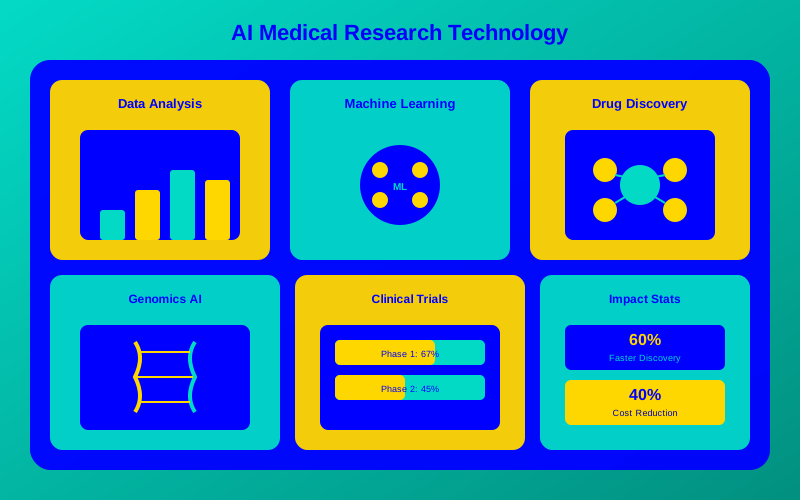
Here’s a quick bar chart on AI wins in 2025.

ai medical research technology chart

Your Step-by-Step Guide: Build a Research Workflow with These Techs

Ready to mix them? Follow this easy plan. It’s like assembling a Lego set for science.

  1. Gather Data: Use big data tools to collect patient files and lab notes. Start small – one folder.
  2. Clean and Watch: Plug in AI data monitoring. It flags bad entries, like duplicates.
  3. Crunch with ML: Feed machine learning your data. Train it on examples, like “Normal vs. tumor cells.”
  4. Read the Text: Add NLP for medical studies. Summarize papers: “Key finding: Drug X helps 80%.”
  5. Predict Next: Run predictive analytics in medicine. Ask: “What’s the risk trend?”
  6. Spark Ideas: Let automated hypothesis generation suggest: “Test Y with Z?”
  7. Test and Tweak: Loop back. Monitor results. Boom – a full cycle!

Try it on a toy project, like predicting plant health (swap for medical data later). You’ll feel like a pro.

(Infographic Idea: Imagine a flowchart – Data In → ML Learn → NLP Read → Predict → Hypothesis Spark → Monitor Loop. Arrows connect like a cycle wheel, with icons: brain for ML, book for NLP, crystal ball for predict.)

The Thrilling Road Ahead with Predictive Analytics in Medicine

We’ve cracked the black box! These 6 AI medical research technologies – from machine learning in research to big data in healthcare – team up to make science faster and fairer. In 2025, 22% of labs use them, up 7x from last year. The win? You solve pains like slow trials with clear “hows.”

Forward peek: Expect more agent AIs that chat like friends, blending all six seamlessly. Your turn – grab one today and invent tomorrow.

Frequently Asked Questions (FAQs)

How does AI medical research technology stay safe?

It uses strict rules like human checks and privacy locks. NVIDIA stresses testing every tool. Always double-check outputs!

Can kids like me try these at home?

Yep! Start with free Python kits for ML. No lab needed – just curiosity.

What’s the top trend for 2025?

Predictive analytics in medicine leads, helping 80% of execs see big changes.

Does it replace doctors?

Nope! It amps them up, like a bike with training wheels – faster, but you’re in control.

Where to learn more on how health AI works?

Dive into our post “Top 5 Fun AI Experiments for Young Inventors” on aitooljournal.com. Share your first try in comments – what’s your wild hypothesis?

ATJ STAFF

Vivian Ohaimadike

AI Drug Discovery Researcher at AI Bloggers Journal®

PhD in Computational Biology, MIT AI for Life Sciences Fellow Led the team behind “MoleculeAI,” a platform accelerating drug discovery timelines

AI Tools Journal®

Get your daily Unbiased Reviews, Expert Insights, News built for Innovation and trends.

Subscribers Form

Related stories