AI-Powered Diagnostics: Unlocking 5 Powerful Benefits for Healthcare in 2025

From tools to ethics, this guide covers everything you need to know about AI-powered diagnostics for 2025.

0

Shares

176

Reads

Key Takeaways

  • What AI-powered diagnostics is and how it works.
  • Five key benefits of using AI in healthcare.
  • A simple step-by-step guide to understand AI diagnostics tools.
  • A comparison of top AI diagnostic tools to pick the best one.
  • Answers to common questions about AI in healthcare.
ai powered diagnostics guide

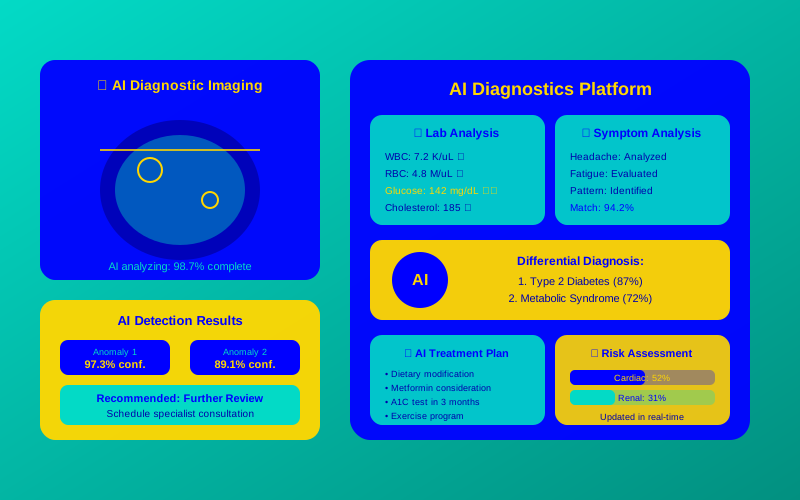
Imagine going to the doctor and getting a super-accurate diagnosis in minutes, thanks to a smart computer that spots things even the best doctors might miss. That’s the magic of AI-powered diagnostics! Many young people are curious about how artificial intelligence (AI) is changing healthcare, but it can feel tricky to understand. This guide will break it down simply, showing you how AI helps doctors make better decisions and why it’s a game-changer in 2025.

What Is AI-Powered Diagnostics?

AI-powered diagnostics is when computers use artificial intelligence to help doctors figure out what’s wrong with a patient. Think of AI like a super-smart librarian who can instantly search through a giant library of medical books to find patterns and answers. It looks at data—like X-rays, blood tests, or even your symptoms—and suggests what might be wrong.

For example, if a doctor uploads an X-ray, an AI tool might spot a tiny fracture that’s hard to see. This helps doctors make faster and more accurate decisions.

“AI in diagnostics is like having a second pair of eyes that never get tired and can process millions of data points in seconds.” — Dr. Eric Topol, cardiologist and AI healthcare expert.

How AI Diagnostics Works

AI diagnostics works by learning from tons of medical data. It’s like teaching a computer to recognize patterns, the way you learn to spot your favorite animal in a picture book. Here’s a simple breakdown:

  1. Data Input: Doctors feed the AI things like X-rays, scans, or patient records.
  2. Pattern Recognition: The AI compares this data to millions of examples it’s been trained on.
  3. Prediction: The AI suggests possible diagnoses or flags issues for the doctor to review.

For instance, an AI tool like Aidoc can analyze a brain scan and warn doctors about a possible stroke in seconds.

“AI doesn’t replace doctors; it’s a tool that makes their work faster and more precise.” — Dr. Fei-Fei Li, AI researcher and co-director of Stanford’s Human-Centered AI Institute.

5 Key Benefits of AI in Healthcare

ai powered diagnostics

AI-powered diagnostics is changing healthcare in big ways. Here are five reasons why it’s so exciting:

1. Faster Diagnoses

AI can analyze medical images or test results in seconds. This means patients get answers quicker, which can be a lifesaver in emergencies like heart attacks.

2. More Accurate Results

AI spots tiny details humans might miss. For example, Google Health’s AI can detect breast cancer in mammograms with 90% accuracy, sometimes outperforming doctors.

3. Saves Time for Doctors

By handling routine tasks, AI lets doctors focus on caring for patients. It’s like having a super-smart assistant who does the boring paperwork.

4. Helps in Remote Areas

In places with few doctors, AI tools can analyze scans and send results to experts far away. This brings top-notch care to small towns.

5. Catches Problems Early

AI can predict diseases before symptoms show up. For example, an AI tool might notice patterns in your bloodwork that hint at diabetes years in advance.

To show how these benefits stack up, here’s a chart comparing AI diagnostics to traditional methods:

ai powered diagnostics guide chart

This chart shows how AI diagnostics outperforms traditional methods in speed, accuracy, cost efficiency, and accessibility.

Top AI Diagnostic Tools in 2025

Here’s a comparison table to help you understand the best AI diagnostic tools available today:

Tool NameKey FeatureBest ForPriceROICons/Issues
AidocReal-time imaging analysisEmergency rooms$50-$200/month per userHigh: Saves time in critical casesRequires integration with hospital systems
PathAICancer detection in pathologyOncology clinicsCustom pricingHigh: Improves accuracyLimited to specific diseases
Zebra MedicalMulti-disease detectionGeneral hospitals$1 per scanModerate: AffordableSlower for complex cases
Google Health AIBreast cancer screeningRadiologyCustom pricingHigh: Top accuracyNot widely available

This table helps you pick the right tool based on your needs, whether it’s speed, cost, or specific disease detection.

Getting Started with AI Diagnostics: A Simple Guide

Want to understand how to use AI diagnostics? Follow these easy steps:

  1. Choose a Tool: Pick an AI tool like Aidoc or Zebra Medical based on what you need (e.g., imaging or pathology).
  2. Upload Data: Feed the tool medical data, like an X-ray or blood test results.
  3. Review Suggestions: Look at the AI’s diagnosis or alerts and share them with a doctor.
  4. Act on Results: Use the AI’s insights to talk to a healthcare provider and plan next steps.

For example, a hospital might use PathAI to upload tissue samples and get a quick cancer diagnosis, helping doctors start treatment faster.

“The future of healthcare is about combining human expertise with AI’s precision.” — Dr. Regina Barzilay, MIT AI researcher and breast cancer survivor.

Understanding AI in Diagnostics: Common Questions Answered

What’s the Difference Between AI Diagnostics and Regular Diagnostics?

Regular diagnostics relies only on doctors and lab tests, which can take time and miss small details. AI diagnostics uses computers to analyze data quickly and spot patterns humans might overlook.

Is AI in Healthcare Safe?

Yes, AI tools are tested to be safe and accurate. They’re designed to help doctors, not replace them, so a human always checks the results.

Can AI Diagnose All Diseases?

Not yet. AI is great for things like cancer or heart disease but is still learning to handle rare or complex conditions.

How Does AI Learn to Diagnose?

AI is trained on millions of medical records, images, and test results. It’s like studying for a big test by practicing with lots of examples.

How Expensive Is AI Diagnostics?

Costs vary. Some tools charge per scan (like Zebra Medical at $1/scan), while others have monthly subscriptions. Hospitals often find the cost worth it for faster, better care.

“AI diagnostics is transforming healthcare by catching diseases earlier and saving lives.” — Dr. Andrew Ng, AI pioneer and co-founder of Coursera.

Looking Ahead: The Future of AI-Powered Diagnostics

So, what’s the bottom line? AI-powered diagnostics is making healthcare faster, more accurate, and accessible to everyone. In 2025, tools like Aidoc and PathAI are helping doctors save lives by catching problems early and reducing mistakes. As AI keeps learning, it’ll get even better at spotting diseases and helping doctors focus on what they do best—caring for patients.

Want to dive deeper? Check out our post on “How AI Tools Are Revolutionizing Medical Imaging in 2025” for more insights, or share your thoughts in the comments below!

ATJ STAFF

Vivian Ohaimadike

AI Drug Discovery Researcher at AI Bloggers Journal®

PhD in Computational Biology, MIT AI for Life Sciences Fellow Led the team behind “MoleculeAI,” a platform accelerating drug discovery timelines

AI Tools Journal®

Get your daily Unbiased Reviews, Expert Insights, News built for Innovation and trends.

Subscribers Form

Related stories