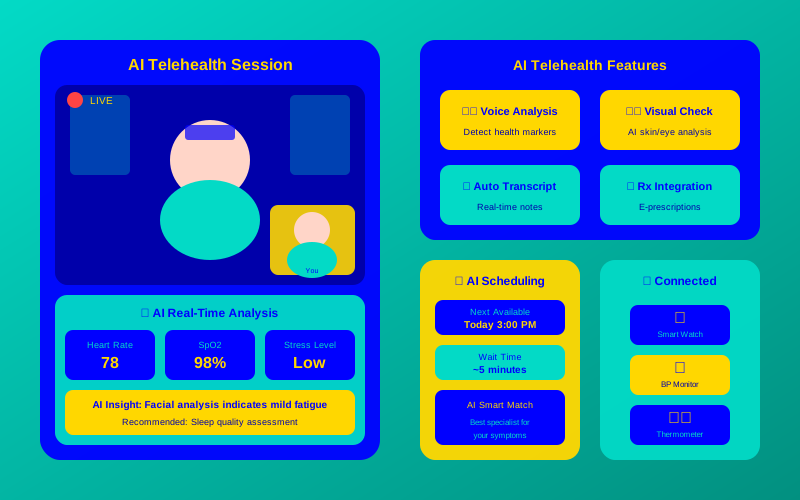
Telehealth usage has stabilized at 40x pre-pandemic levels according to McKinsey research. The challenge now: delivering virtual care that matches in-person quality. AI makes this possible.
This guide covers AI tools that enhance every aspect of telehealth—from initial triage to ongoing monitoring.
Buoy Health and Ada provide AI-powered symptom assessment before patients ever reach a provider. The AI asks questions, narrows possibilities, and recommends appropriate care levels.
Results from large health systems:
40-60% of inquiries resolved without provider time
ER diversion for non-emergency conditions
Faster routing to appropriate specialists
24/7 availability with consistent quality
"Our AI triage system handles 2,000 patient inquiries monthly. Over half get appropriate self-care guidance or scheduling without provider involvement. The ones who do need appointments come with better context."
— Chief Digital Officer, Regional Health System
Remote Patient Monitoring with AI
AI transforms remote monitoring data into actionable insights. Instead of drowning in readings, providers see alerts when AI detects concerning patterns.
According to American Heart Association research, AI-enhanced remote monitoring reduces hospital readmissions by 30-40% for cardiac patients.
Key capabilities:
Anomaly detection: Flags readings outside normal patterns
Trend analysis: Identifies gradual deterioration
Risk stratification: Prioritizes which patients need attention
Average improvements reported by professionals using AI tools in this category
Implementation Strategy
Adopting AI tools successfully requires a structured approach. Don't try to transform everything at once. Start small, measure results, and expand gradually.
Identify high-impact tasks: Start with the most time-consuming repetitive tasks in your workflow.
Choose one tool: Don't evaluate five tools simultaneously. Pick the best fit for your primary need.
Run a pilot: Test with a small project or team for 2-4 weeks before rolling out broadly.
Measure outcomes: Track time savings, quality improvements, and user satisfaction.
Iterate and expand: Based on pilot results, refine your workflow and add new use cases.
☐ Current workflow bottlenecks identified
☐ Tool selected based on requirements
☐ Pilot project planned with clear success metrics
☐ Team trained on basic tool usage
☐ Review process established for AI outputs
☐ Expansion plan drafted for post-pilot rollout
Best Practices
Do This
Avoid This
Why It Matters
Start with one clear use case
Try to automate everything at once
Focused adoption builds confidence and skills
Always review AI outputs
Trust AI blindly
AI is powerful but imperfect — human oversight is essential
Measure before and after
Assume improvements
Data-driven adoption ensures real value
Train your team gradually
Mandate instant adoption
Gradual training builds lasting habits
"The organizations seeing the biggest returns from AI aren't the ones with the biggest budgets. They're the ones with the clearest implementation plans."
— McKinsey Digital Report, 2024
Getting Started Today
AI tools for ai telehealth solutions are mature, affordable, and proven. The gap between early adopters and holdouts is growing every month. The best time to start is now — and the best approach is to start small, measure everything, and build from there.
For many conditions, yes. AI-enhanced telehealth adds continuous monitoring, instant data analysis, and automated follow-ups. Some conditions still need in-person evaluation, but AI telehealth handles a surprisingly wide range effectively.