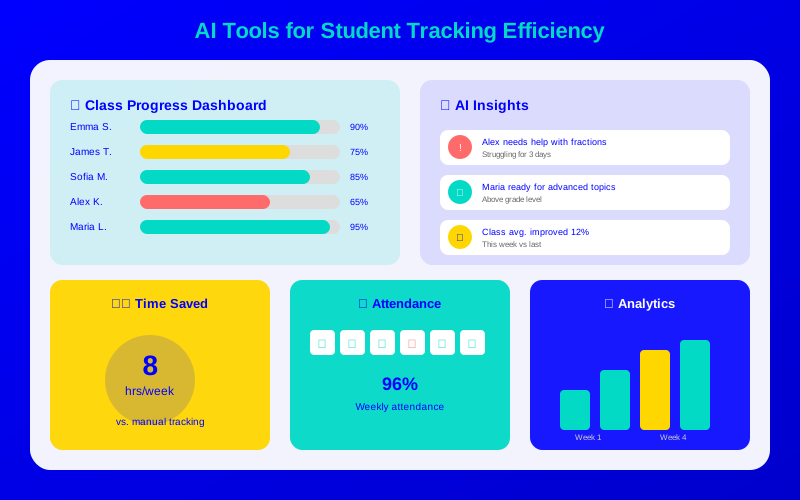
Teachers track too much data manually. Grades, attendance, behavior, interventions, IEP goals, parent contacts—all scattered across different systems and spreadsheets. AI tracking tools consolidate everything and surface what matters.
According to Education Week, districts using data analytics effectively see measurable improvements in student achievement. The key: turning data into actionable insights, not just storing it.
What You Will Learn:
Top AI platforms for student tracking
How early warning systems identify at-risk students
AI excels at pattern recognition humans miss. Early warning systems analyze attendance, grades, behavior, and engagement to flag students who might struggle—weeks before problems become visible.
Panorama Education combines academic data with social-emotional surveys. The AI identifies students at risk across multiple dimensions, not just grades. Teachers get alerts with specific support recommendations.
What these systems track:
Academic: Grade trends, missing assignments, test performance
"Our early warning system flagged 23 students in September. We intervened immediately. By December, 19 of them had improved significantly. Without the AI, we would have noticed in January—if at all."
— Middle school assistant principal, Illinois
MTSS/RTI Tracking
Multi-Tiered System of Supports (MTSS) requires extensive documentation. Who receives which interventions? What's working? What needs adjustment? AI tools manage this complexity.
Branching Minds specializes in intervention management. It tracks which students receive which supports, monitors progress toward goals, and suggests evidence-based interventions based on student needs.
For teachers managing IEP goals, AI tracking ensures nothing falls through the cracks. The system reminds you of progress monitoring dates, auto-generates reports, and flags students not meeting benchmarks.
Privacy and Compliance
Student data is sensitive. Before adopting any tracking tool, verify compliance with:
Work with your IT department. They should vet tools before classroom use. Established platforms like PowerSchool and Panorama have compliance documentation readily available.
When professionals report breaking even on AI tool investment
Step-by-Step Implementation
Audit your current workflow: Map where you spend time and identify bottlenecks.
Select the right tool: Match your biggest pain point to a tool's core strength.
Start small: Run a 2-week pilot on one project or task type.
Measure and compare: Compare pilot results to your pre-AI baseline.
Scale what works: Expand successful workflows to your full workload.
☐ Workflow bottlenecks identified and prioritized
☐ Tool selected and trial account created
☐ Pilot project and timeline defined
☐ Success metrics established
☐ Team onboarding plan in place
☐ Post-pilot review date scheduled
Take Action This Week
The gap between AI-enabled teachers professionals and those using traditional methods is growing every quarter. Don't wait for the perfect moment — start with one tool, one task, and one week of focused experimentation.
Reputable tools follow FERPA, COPPA, and state privacy laws. Look for Student Privacy Pledge signatories. Your district IT department should vet tools before classroom use.