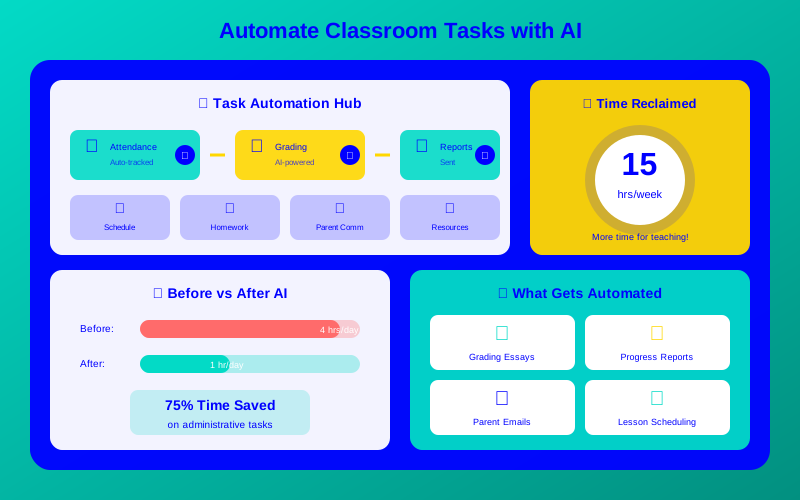
Teachers spend too much time on tasks that don't involve teaching. According to a McKinsey report, teachers spend less than half their time on direct instruction. The rest goes to admin, planning, and communication.
Automation reclaims those hours. Not by replacing teachers, but by handling the repetitive tasks that drain energy and time. Every automated task is time you can spend on what matters: teaching, relationships, and your own well-being.
What You Will Learn:
Which classroom tasks are best suited for automation
Specific tools for each type of task
A step-by-step approach to building your automation stack
How to measure time saved
Tasks Best Suited for Automation
Not everything should be automated. The best candidates share these traits:
Repetitive: You do it the same way every time
Predictable: Clear rules determine the outcome
Low creativity: Doesn't require human judgment
Time-consuming: Takes meaningful chunks of your day
Task Category
Specific Examples
Time Wasted Weekly
Automation Potential
Communication
Parent updates, reminders, newsletters
2-3 hours
High
Grading
Objective quizzes, attendance, participation
3-5 hours
High
Distribution
Sharing materials, collecting assignments
1-2 hours
High
Planning
Lesson structure, activity templates
4-8 hours
Medium-High
Documentation
Progress reports, behavior logs
2-4 hours
Medium
Automate Communication
Parent communication eats hours. Typing the same updates, chasing missing assignments, sending reminders. These tools automate the repetitive parts:
Schedule messages in advance. Set up recurring reminders ("Test tomorrow!" every Thursday). Translate automatically to 90+ languages. Free for teachers.
Centralized parent communication with automated translation, read receipts, and scheduled posts. Integrates with your SIS to auto-notify about grades and attendance.
Google Classroom Automation
Set up scheduled posts, automatic assignment collection, and due date reminders. All built into a platform most schools already use.
"I used to spend Sunday evenings writing parent newsletters. Now I set up templates in August, schedule them for the whole semester, and spend Sundays actually resting."
— Elementary teacher, Ohio
Automate Grading
Not all grading needs your expertise. Objective assessments—multiple choice, fill-in-the-blank, math problems with single correct answers—can be graded instantly.
Pear Deck: Distribute interactive slides directly to student devices
Set up your materials once. Reuse and refine semester after semester.
When professionals report breaking even on AI tool investment
Step-by-Step Implementation
Audit your current workflow: Map where you spend time and identify bottlenecks.
Select the right tool: Match your biggest pain point to a tool's core strength.
Start small: Run a 2-week pilot on one project or task type.
Measure and compare: Compare pilot results to your pre-AI baseline.
Scale what works: Expand successful workflows to your full workload.
☐ Workflow bottlenecks identified and prioritized
☐ Tool selected and trial account created
☐ Pilot project and timeline defined
☐ Success metrics established
☐ Team onboarding plan in place
☐ Post-pilot review date scheduled
Take Action This Week
The gap between AI-enabled teachers professionals and those using traditional methods is growing every quarter. Don't wait for the perfect moment — start with one tool, one task, and one week of focused experimentation.
Attendance tracking, assignment distribution, objective grading, parent updates, progress reports, and reminder scheduling are all automatable. Any task with predictable patterns is a good candidate.