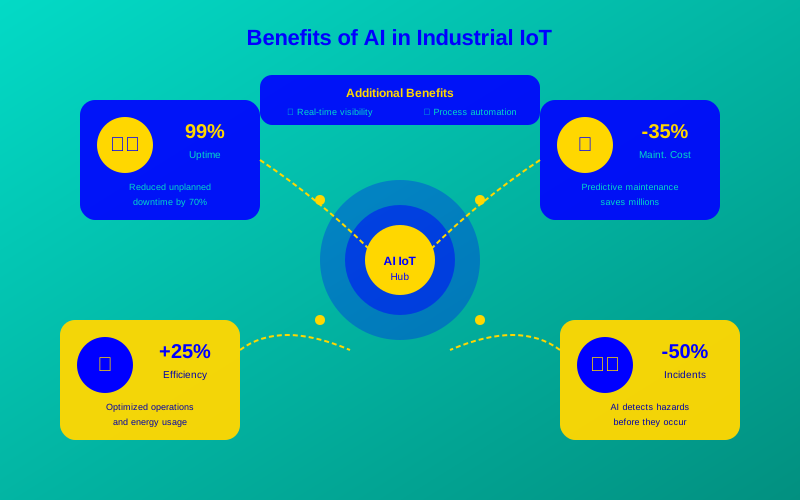
Plant managers and COOs face tough challenges: boosting output, cutting costs, and keeping workers safe—all at once. The benefits of AI in Industrial IoT (IIoT) offer game-changing solutions. From smarter machines to safer factories, AI is transforming how industries operate in 2025.
What Is AI in IIoT?
AI in IIoT means using artificial intelligence to make connected industrial devices smarter. Think of IIoT as a network of machines talking to each other—like a team of workers passing notes. AI is the brain that analyzes those notes to make better decisions. For example, AI can predict when a machine will break or spot defects in products instantly.
7 Transformative Benefits of AI in Industrial IoT
1. Predictive Maintenance Saves Money
AI in IIoT spots equipment issues before they happen. By analyzing data from sensors, AI predicts when a machine might fail. This cuts downtime and repair costs.
Example: A car manufacturing plant uses AI to monitor conveyor belts. Sensors detect unusual vibrations, and AI flags a potential motor failure. The plant fixes it during a scheduled break, saving $50,000 in unplanned downtime.
“Predictive maintenance powered by AI can reduce maintenance costs by up to 30% and downtime by 45%.”
— Deloitte, Industry 4.0: At the Intersection of Readiness and Responsibility (2024).
2. Faster Production Timelines
AI optimizes production schedules by analyzing real-time data. It adjusts workflows to avoid bottlenecks, speeding up output. This is a key IIoT advantage for meeting tight deadlines.
Example: A steel factory uses AI to manage its furnace operations. AI adjusts heat levels based on sensor data, cutting production time by 15%. This means more steel produced daily.
3. Improved Quality Control
AI in IIoT catches defects that humans might miss. Using cameras and sensors, AI inspects products in real time, ensuring top quality. This is one of the top artificial intelligence industrial perks.
Example: A beverage company uses AI vision systems to check bottle labels. If a label is crooked, AI flags it instantly, reducing defective products by 20%.
“AI-driven quality control can improve defect detection rates by up to 90% in manufacturing.”
— McKinsey & Company, The Future of Manufacturing (2025).
4. Cost-Effective IIoT Operations
AI reduces waste by optimizing resource use. It analyzes energy, materials, and labor to find savings. This makes IIoT cost-effective for any plant.
Example: A textile factory uses AI to monitor energy use. AI adjusts machine settings to run at peak efficiency, saving $100,000 annually on electricity.
5. Enhanced Industrial Safety
AI improves workplace safety by monitoring risks in real time. It uses sensors and cameras to detect hazards and alert workers. This creates safer factories.
Example: In a chemical plant, an AI vision system spots a worker too close to a hazardous machine. It triggers an alarm, preventing a potential injury.
“AI-powered safety systems can reduce workplace accidents by up to 25% in industrial settings.”
— International Manufacturing Association, Safety in Industry 4.0 (2024).
6. Smarter Supply Chain Management
AI in IIoT tracks inventory and predicts demand. This prevents overstocking or shortages, streamlining operations. It’s a major AI for operational efficiency win.
Example: A logistics company uses AI to monitor warehouse stock. AI predicts when parts will run low and orders more, reducing delays by 30%.
7. Data-Driven Decision Making
AI turns raw IIoT data into actionable insights. It analyzes patterns to guide better decisions, from production to staffing. This drives overall efficiency.
Example: A food processing plant uses AI to analyze sales data. AI suggests increasing production of a popular snack, boosting profits by 10%.
“AI in IIoT enables data-driven decisions that can increase operational efficiency by 20%.”
— Gartner, Emerging Technologies in Manufacturing (2025).
Choosing the Right AI in IIoT Solution
| Tool Name | Key Feature | Best For | Price | ROI | Cons/Issues |
|---|---|---|---|---|---|
| Siemens MindSphere | Predictive maintenance | Large factories | $500/month+ | High: Saves downtime costs | Complex setup |
| GE Predix | Quality control | Medium plants | $300/month+ | Medium: Improves defect detection | Steep learning curve |
| IBM Watson IoT | Safety monitoring | High-risk industries | $400/month+ | High: Reduces accidents | Requires training |
| Microsoft Azure IoT | Supply chain optimization | Logistics | $200/month+ | High: Cuts inventory costs | Integration challenges |
Table Goal: Help plant managers choose the best AI in IIoT tool for their needs.
Practical Guide: How to Implement AI in Industrial IoT
- Assess Your Needs: Identify pain points like downtime or safety risks.
- Choose a Platform: Pick a tool like Siemens MindSphere for predictive maintenance.
- Install Sensors: Add IoT sensors to machines for data collection.
- Integrate AI: Connect sensors to the AI platform for real-time analysis.
- Train Staff: Teach workers to use AI insights for decision-making.
- Monitor Results: Track savings and efficiency gains monthly.
Cost Savings from AI in IIoT
Below is a bar chart showing potential cost savings from AI in IIoT across key areas. The data is based on industry averages from 2024 studies.
Looking Ahead: The Future of AI in IIoT
The benefits of AI in IIoT are reshaping industries in 2025. From cost-effective operations to enhanced industrial safety, AI delivers measurable results. Plant managers can start small with one tool, like predictive maintenance, and scale up. To explore more, check out our Downloadable Checklist: Is Your Facility Ready for AI in IIoT? or share your experiences in the comments!
Frequently Asked Questions (FAQs)
What Are the Main IIoT Advantages with AI?
AI boosts IIoT with predictive maintenance, faster production, and improved quality control. It saves money and time while making factories safer.
How Does AI Improve Operational Efficiency?
AI analyzes data to optimize workflows, reduce waste, and speed up production. For example, it adjusts machine settings to save energy.
Is AI in IIoT Cost-Effective?
Yes, AI cuts costs by reducing downtime, energy use, and defects. A textile factory saved $100,000 yearly with AI-driven energy monitoring.
How Does AI Enhance Industrial Safety?
AI uses sensors and cameras to spot risks, like workers near dangerous machines, and sends alerts to prevent accidents.