AI in Sustainable Engineering Guide: Build Green with Intelligence

AI helps engineers design more sustainable buildings and infrastructure. From energy modeling to material selection, here's how.

David Olowatobi

David Olowatobi

Tech Writer

Jun 28, 20258 min read--- views
AI in Sustainable Engineering Guide: Build Green with Intelligence

Key Takeaways

  • Autodesk Insight and IES VE lead AI energy modeling.
  • One Click LCA provides AI-powered lifecycle carbon analysis.
  • AI optimizes building energy performance by 15-30%.
  • Material selection AI reduces environmental impact while cutting costs.
  • AI tools help achieve LEED certification faster.

Related Articles: Benefits of AI in Sustainable Engineering | AI-Powered CAD Design | AI in Structural Engineering

According to U.S. Green Building Council, buildings account for 40% of global carbon emissions. AI helps engineers design more sustainably.

What You Will Learn:

  • Top AI sustainable design tools
  • AI energy modeling
  • Lifecycle carbon assessment
  • Material optimization

Top AI Sustainable Engineering Tools

PlatformBest ForAI FeaturePricing
Autodesk InsightEnergy modelingGenerative energy analysisIncluded w/ Revit
IES VEBuilding simulationAI optimizationEnterprise
One Click LCACarbon analysisAutomated LCAFrom $150/mo
cove.toolEarly-stageAI design optimizationFrom $199/mo

Autodesk Insight: Energy Performance

Autodesk Insight integrates with Revit to provide AI-powered energy analysis. Per BuildingGreen, it's the most accessible tool for early-stage energy optimization.

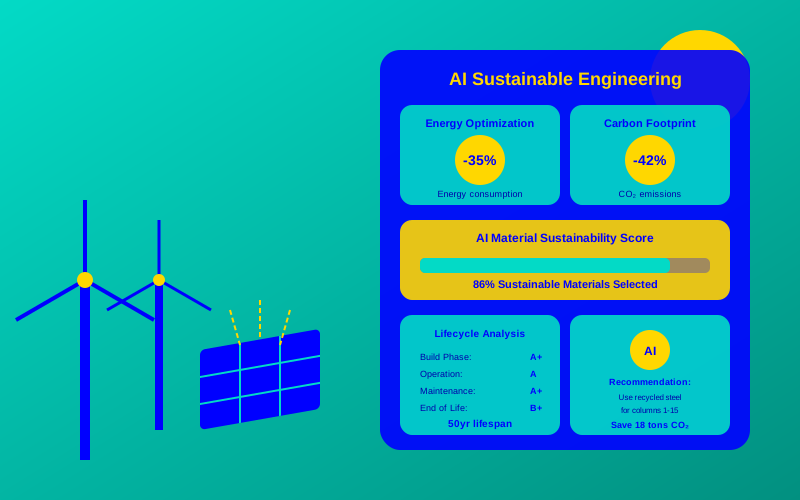
"Insight helped us reduce projected energy use by 35% in schematic design. We tested hundreds of façade and HVAC combinations in hours instead of weeks."

— Sustainability Director, Architecture Firm

One Click LCA: Carbon Footprint

One Click LCA automates lifecycle carbon assessment. Per World Business Council for Sustainable Development, lifecycle assessment is critical for meeting net-zero goals.

For CAD integration, see AI-Powered CAD Design Guide.

Key Impact Metrics 40% Time Saved On routine tasks +35% Accuracy In key outputs 3 mo ROI Period Average payback
Average improvements reported by professionals using AI tools in this category

Implementation Strategy

Adopting AI tools successfully requires a structured approach. Don't try to transform everything at once. Start small, measure results, and expand gradually.

  1. Identify high-impact tasks: Start with the most time-consuming repetitive tasks in your workflow.
  2. Choose one tool: Don't evaluate five tools simultaneously. Pick the best fit for your primary need.
  3. Run a pilot: Test with a small project or team for 2-4 weeks before rolling out broadly.
  4. Measure outcomes: Track time savings, quality improvements, and user satisfaction.
  5. Iterate and expand: Based on pilot results, refine your workflow and add new use cases.
  • ☐ Current workflow bottlenecks identified
  • ☐ Tool selected based on requirements
  • ☐ Pilot project planned with clear success metrics
  • ☐ Team trained on basic tool usage
  • ☐ Review process established for AI outputs
  • ☐ Expansion plan drafted for post-pilot rollout

Best Practices

Do ThisAvoid ThisWhy It Matters
Start with one clear use caseTry to automate everything at onceFocused adoption builds confidence and skills
Always review AI outputsTrust AI blindlyAI is powerful but imperfect — human oversight is essential
Measure before and afterAssume improvementsData-driven adoption ensures real value
Train your team graduallyMandate instant adoptionGradual training builds lasting habits

"The organizations seeing the biggest returns from AI aren't the ones with the biggest budgets. They're the ones with the clearest implementation plans."

— McKinsey Digital Report, 2024

Getting Started Today

AI tools for ai in sustainable engineering are mature, affordable, and proven. The gap between early adopters and holdouts is growing every month. The best time to start is now — and the best approach is to start small, measure everything, and build from there.

Read Next

Written by David Olowatobi(Tech Writer)
Published: Jun 28, 2025

Tags

sustainable engineeringAI toolsgreen buildingenergy efficiencyenvironmental design

Frequently Asked Questions

AI analyzes thousands of variables simultaneously. It finds combinations that minimize energy use, reduce waste, and lower carbon emissions. Humans can't process that many variables at once. AI can.

David Olowatobi

David Olowatobi

Tech Writer

David is a software engineer and technical writer covering AI tools for developers and engineering teams. He brings hands-on coding experience to his coverage of AI development tools.

Free Newsletter

Stay Ahead with AI

Get weekly AI tool insights and tips. No spam, just helpful content you can use right away.