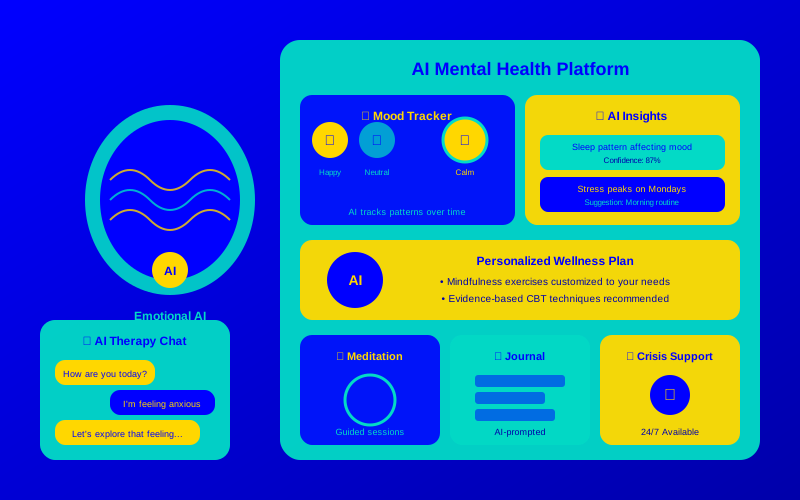
Mental health care faces a capacity crisis. According to WHO data, the global shortage of mental health professionals means most people with mental health conditions receive no treatment. AI tools help bridge this gap.
This guide covers evidence-based AI mental health tools that provide real support while maintaining appropriate clinical boundaries.
What You Will Learn:
Top AI mental health tools and their evidence base
Woebot delivers cognitive behavioral therapy techniques through a conversational AI. Developed by Stanford researchers and published in JMIR Formative Research, it demonstrated significant reductions in depression and anxiety symptoms.
Key features:
Daily check-ins: Brief conversations to track mood
CBT techniques: Thought challenging, behavioral activation
Psychoeducation: Teaches mental health concepts
Crisis detection: Automatically escalates severe symptoms
"Woebot helped me recognize my thought patterns between therapy sessions. It's not a replacement for my therapist, but it reinforces what we work on together."
— Woebot user, published testimonial
Wysa: AI Plus Human Support
Wysa combines AI conversations with optional access to human coaches. The hybrid model provides 24/7 AI support with human escalation for complex needs.
Average improvements reported by professionals using AI tools in this category
Implementation Strategy
Adopting AI tools successfully requires a structured approach. Don't try to transform everything at once. Start small, measure results, and expand gradually.
Identify high-impact tasks: Start with the most time-consuming repetitive tasks in your workflow.
Choose one tool: Don't evaluate five tools simultaneously. Pick the best fit for your primary need.
Run a pilot: Test with a small project or team for 2-4 weeks before rolling out broadly.
Measure outcomes: Track time savings, quality improvements, and user satisfaction.
Iterate and expand: Based on pilot results, refine your workflow and add new use cases.
☐ Current workflow bottlenecks identified
☐ Tool selected based on requirements
☐ Pilot project planned with clear success metrics
☐ Team trained on basic tool usage
☐ Review process established for AI outputs
☐ Expansion plan drafted for post-pilot rollout
Best Practices
Do This
Avoid This
Why It Matters
Start with one clear use case
Try to automate everything at once
Focused adoption builds confidence and skills
Always review AI outputs
Trust AI blindly
AI is powerful but imperfect — human oversight is essential
Measure before and after
Assume improvements
Data-driven adoption ensures real value
Train your team gradually
Mandate instant adoption
Gradual training builds lasting habits
"The organizations seeing the biggest returns from AI aren't the ones with the biggest budgets. They're the ones with the clearest implementation plans."
— McKinsey Digital Report, 2024
Getting Started Today
AI tools for ai mental health tools are mature, affordable, and proven. The gap between early adopters and holdouts is growing every month. The best time to start is now — and the best approach is to start small, measure everything, and build from there.
No. AI mental health tools supplement professional care. They provide support between sessions, help with screening, and teach coping techniques. For serious mental health conditions, professional treatment remains essential.