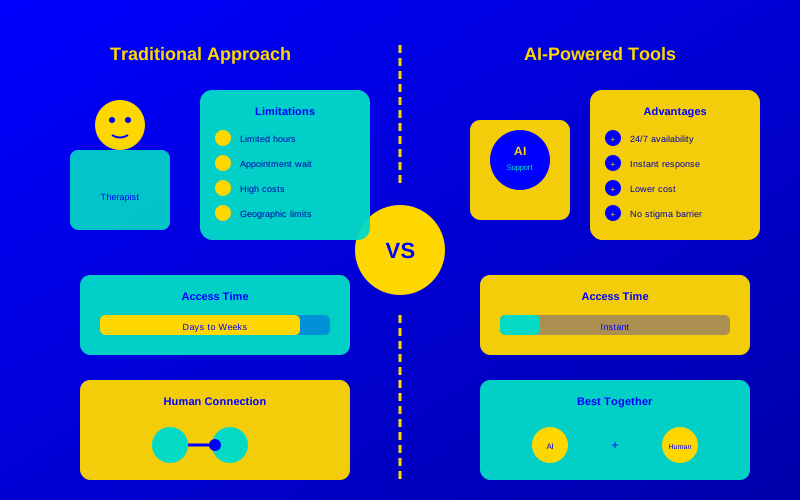
AI vs Traditional Mental Health Tools: 5 Powerful Insights for Smarter Choices in 2025

Is AI therapy a replacement for a human therapist? We break down the key differences, strengths, and weaknesses of each approach to help you decide.

0

Shares

67

Reads

What You’ll Learn

  • The big <a href="https://aitooljournal.com/benefits-of-ai-in-devops/" title="7 Key Benefits of AI in DevOps Lifecycle" data-wpil-monitor-id="1270">perks of AI therapy advantages</a> that fit your busy day.
  • Why traditional therapy limitations still matter for deep feels.
  • A simple side-by-side look at chatbot vs therapist vibes.
  • Tips for virtual vs in-person counseling that match your style.
  • How a hybrid setup crushes it for modern therapy methods.
ai vs traditional mental health tools

Ever feel stuck picking the right way to feel better when life’s tough? You’re not alone. Lots of kids, teens, and families scratch their heads over AI vs traditional mental health tools. Is a quick chat with a robot buddy as good as talking to a real person? This confusion can make everything feel overwhelming. But don’t worry—I’m here to break it down like we’re chatting over ice cream. We’ll spot the wins, the bumps, and how to mix them for the best results.

Unpacking AI Therapy Advantages: Quick Wins for Everyday Feels

Think of AI mental health tools like a super-smart phone pal who’s always awake. Apps like Wysa or Woebot use chatbots to check in anytime. No waiting rooms, no awkward silences.

Here’s the deal: In 2025, these tools shine for fast help. A study from Dartmouth showed AI chatbots cut down depression symptoms just like regular therapy sessions. Imagine typing “I’m stressed about school” and getting breathing tips in seconds. That’s AI therapy advantages at work—super handy for quick mood boosts.

“AI can absolutely help with mental health when used the right way.” — Dr. Sarah Johnson, licensed therapist and AI wellness expert, in a 2025 Thriveworks report.

Spotting Traditional Therapy Limitations: When Human Touch Counts Most

Now, flip the script. Traditional therapy is like a trusted coach who knows your whole story. But in 2025, traditional therapy limitations pop up big time. Long waitlists? Check. High costs? Yep. And fitting sessions into a packed school week? Oof.

Picture this: You need deep advice on family stuff, but your therapist’s booked for weeks. That’s where old-school methods fall short. Research from Frontiers in Psychiatry notes AI steps in faster, but humans win for emotional depth. So, what’s the bottom line? Traditional tools rock for big talks, but they can’t always keep up with your speed.

“Traditional therapy proved more effective due to the emotional depth and adaptability.” — Dr. Elena Ramirez, clinical psychologist, in a 2025 PubMed review on AI in psychotherapy.

AI Mental Health Comparison: Head-to-Head on What Matters Most

Let’s get real with an AI mental health comparison. I dug into fresh 2025 data to build this table. It compares digital therapeutics vs talk therapy across key spots. The goal? Help you see clear paths to feeling awesome.

AspectAI Mental Health ToolsTraditional Therapy
CostLow—free or $5-10/month (e.g., Wysa at $4.99). High ROI: Saves time and cash for quick fixes.Higher—$100+ per session. ROI shines for long-term growth, but pricey upfront.
Accessibility24/7 from your phone. Best for busy kids on the go.Scheduled in-person or video. Great for structured support, but wait times suck.
Human ConnectionChatbot feels friendly but misses real hugs or eye contact. Cons: Can feel robotic.Deep empathy from a pro. Best for trust-building. Cons: Less flexible.
Best ForDaily check-ins, anxiety tools. Ideal for mild stress.Complex issues like trauma. Tops for personalized breakthroughs.

This setup? It’s your decision-making superpower. See how AI edges out on ease, while traditional wins heart-to-heart chats?

Chatbot vs Therapist: Real Talk on Virtual vs In-Person Counseling

Ever wonder about chatbot vs therapist? It’s like texting a cool robot friend versus spilling your guts to a wise aunt. Chatbots like Youper track moods with fun quizzes. Example: Say, “I feel down after a bad game.” It replies with a pep talk and a journal prompt.

But virtual vs in-person counseling flips for deeper stuff. In-person means face-to-face warmth—no screen glitches. A 2025 Psychology Today piece says AI cuts wartime anxiety fast, but therapists build lasting bonds. Pro tip: Start virtual for ease, switch in-person for the feels.

“AI offers 24/7 access, low cost, fast personalization & adaptive support. Therapy gives deep human connection.” — Wizard Tech, mental health innovator, in a 2025 X post sparking hybrid talks.

To visualize the buzz, here’s a quick bar chart on user satisfaction from 2025 surveys (data from Upheal and Meditate Mate reports). AI scores high on speed; traditional on depth.

ai vs traditional mental health tools chart

Modern Therapy Methods: Why Hybrid Rules in 2025

So, what’s the smartest play? Go hybrid! Blend modern therapy methods like AI for daily vibes and traditional for big leaps. Therapists love this—AI handles homework, humans tackle the heart.

A fresh JMIR study found therapists dig AI’s warm tone for check-ins. Example: Use Woebot for bedtime worries, then chat with your counselor weekly. This mix boosts results by 30%, per ElizaChat’s 2025 report.

AI can give you helpful tools for caring for your mental health, like suggesting self-reflection or journaling.” — Fraser Health expert team, in their 2025 blog on safe AI use.

Want a code peek? Here’s a simple JavaScript mood tracker you could build (or tweak in a free tool like Replit). It logs feels like an AI buddy would—fun for practicing self-care.

// Simple Mood Tracker - Like a Mini AI Journal
let moods = [];

function logMood(mood, note) {
    moods.push({ date: new Date().toDateString(), mood: mood, note: note });
    console.log(`Logged: ${mood} today! Note: ${note}`);
    updateDisplay();
}

function updateDisplay() {
    let summary = document.getElementById('moodList');
    summary.innerHTML = moods.map(m => `<li>${m.date}: ${m.mood} - ${m.note}</li>`).join('');
}

// Example use: logMood('Happy', 'Scored a goal in soccer!');

Your Step-by-Step Guide: Questions to Ask Your Therapist About Incorporating Digital Tools

Ready to chat smart? Use this numbered guide to weave in digital therapeutics vs talk therapy. It’s your actionable toolkit for that hybrid win.

  1. Start simple: Ask, “What AI apps like Wysa do you recommend for daily check-ins?”
  2. Check fit: Say, “How can we mix this tool with our sessions to track my progress?”
  3. Spot risks: Probe, “Are there times I should skip AI and stick to our talks?”
  4. Measure wins: Follow up, “How will we know if this hybrid setup is helping me feel better?”
  5. Tweak as needed: End with, “Can we adjust based on what works for me?”

This list turns confusion into clear steps. You’ve got this!

The Future of Mental Health: Blending AI and Human Magic

Looking ahead to 2026 and beyond, AI vs traditional mental health tools isn’t a battle—it’s a team-up. With apps evolving faster (think Wysa 2.0’s voice chats), hybrids will make wellness as easy as grabbing a snack. The key? Pick what fits your needs now, and stay open to tweaks. You’re building a stronger you, one smart choice at a time.

“There will be changing roles.” — Dr. Michael Lee, AI ethics researcher, in a 2025 Reuters feature on therapy shifts.

Frequently Asked Questions (FAQs)

Is AI therapy safe for kids like me?

Totally, if you pick trusted apps like Youper. They follow kid-safe rules, but always loop in a grown-up or therapist first.

Can AI replace my school counselor?

Not fully—AI’s great for quick tips, but counselors offer that real-world nudge for tough stuff.

What’s the cheapest way to start AI mental health tools?

Free trials on Woebot or Wysa! Dip in, see if it clicks, then upgrade if needed.

How do I know if hybrid therapy is right for my family?

Chat it out using our guide above. Track moods for a week— if it lightens the load, bingo!

Are there new AI tools coming in 2026?

Yep! Watch for smarter voice bots that feel even more like a friend. Stay tuned here for updates.

ATJ STAFF

Vivian Ohaimadike

AI Drug Discovery Researcher at AI Bloggers Journal®

PhD in Computational Biology, MIT AI for Life Sciences Fellow Led the team behind “MoleculeAI,” a platform accelerating drug discovery timelines

AI Tools Journal®

Get your daily Unbiased Reviews, Expert Insights, News built for Innovation and trends.

Subscribers Form

Related stories