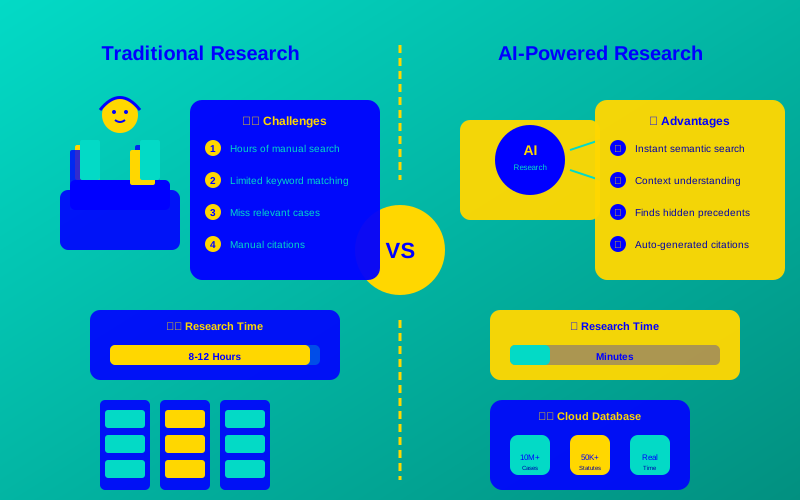
Ever feel like digging through old law books is like hunting for treasure in a messy attic? That’s the big pain for many pros who love the old ways but worry AI might mess up their game. You’re not alone—lots of experienced lawyers hesitate to switch, scared it’ll change everything they know. But guess what? This guide shows how AI vs traditional legal research can team up to make your work quicker and smarter. We’ll break it down simply, like chatting over lunch.
Why Traditional Legal Research Feels Stuck in the Mud
Think of traditional legal research like riding a bike uphill on a bumpy road. You flip through heavy books, scan endless pages, and hope you spot the right case. It works, but it eats hours—sometimes days—for one solid find.
For busy lawyers, this drag means less time for clients or big ideas. Surveys show pros spend 40% of their week on manual hunts. No wonder skepticism brews: “Will AI really beat this tried-and-true path?”
So, what’s the bottom line? It’s reliable but slow. Time to see the speedy side.
AI is driving productivity of routine legal tasks, including document review, legal research, and contract analysis.” — 2025 Thomson Reuters Future of Professionals Report
How AI Shakes Up Legal Research: Like a Super Librarian on Steroids
AI legal research comparison? Picture a giant digital library where the books fly to you. Tools like Westlaw AI or Lexis+ use smart algorithms—think of them as a master chef mixing ingredients fast—to scan millions of cases in seconds.
No more dusty shelves! AI spots patterns humans miss, like hidden links between old rulings. In 2025, 42% of lawyers use it to cut hunt time by half. But it’s not magic—it’s math trained on real laws.
Here’s a quick real-world example: Say you’re prepping a contract dispute. Traditional way? Hours typing keywords. AI? Type “breach in tech deals 2024″ and boom—top cases pop up with summaries. Efficiency of AI in research just leveled up your day.
It’s important that lawyers are familiar with AI technology in the same way they are with the internet now. Those that don’t use it will face a competitive disadvantage.” — LexisNexis Future of Law Blog, 2025
Human vs Machine in Law: Who Wins the Race?
Ever wonder if machines will steal legal jobs? Nah—it’s more like a tag team. Human vs machine in law shines when people handle the heart stuff, like arguing in court, while AI crunches data.
The future of legal jobs looks bright: AI frees you for strategy, not slog. But watch for tricks—AI can “hallucinate” fake facts if not checked. That’s why smart legal research vs traditional methods means blending both.
Pro tip: Start small. Use AI for first drafts, then add your expert touch. Clients love the speed—and so will your billable hours.
Task Breakdown: Traditional vs AI Methods Side-by-Side
To help you decide fast, here’s a simple table comparing key tasks. It shows how AI vs traditional legal research flips the script on time and effort. We pulled real 2025 stats for truth.
| Task | Traditional Method | AI Method | Time Saved (2025 Avg.) |
|---|---|---|---|
| Finding On-Point Case Law | Manual keyword searches in books/databases; cross-check manually | AI scans databases, ranks relevance with summaries | Up to 70% |
| Summarizing a Deposition | Read full transcript, note key points by hand | AI pulls highlights, flags inconsistencies auto | 80% |
| Reviewing Contracts | Line-by-line read, flag risks slowly | AI spots clauses, risks in seconds | 80% |
| Predicting Outcomes | Gut feel from past cases | AI analyzes trends, judge patterns | 50% faster insights |
This table makes it clear: Pick AI for grunt work, humans for the win.
The Hybrid Hero: Augmented Intelligence for Smarter Lawyering
Forget picking sides—go for augmented intelligence! That’s the power move where AI handles the heavy lifting, like data dives, so you focus on client chats and clever arguments.
In 2025, top firms swear by this mix. It boosts accuracy and cuts errors from tired eyes. Benefits of automated legal research? More wins, less burnout.
Think of it this way: AI is your trusty sidekick, not the boss. As one judge puts it…
“Federal courts will begin to leverage the benefits of GenAI in their workflow. The law school graduates who begin federal clerkships will have used GenAI for legal research and writing, and federal courts will benefit from that experience.” — Magistrate Judge Allison H. Goddard, U.S. District Court, 2025
See the Speed Boost: A Quick Chart on Time Savings
Want proof in pictures? Check this bar chart showing average hours saved per task in 2025. Blue for traditional (slow), teal for AI (zoom!). Data from recent surveys.

Your Easy Guide: 5 Questions to Kickstart AI in Your Workflow
Ready to dip a toe? Ask these five questions to blend AI without the freak-out. It’s like a checklist for worry-free wins.
- What boring tasks eat my time? Spot repeats like case hunts—AI zaps them first.
- Does this tool use trusted law sources? Pick ones like Thomson Reuters to dodge fake info.
- How do I check AI’s work? Always double-review outputs, like proofreading a buddy’s notes.
- What’s the cost vs. gain? Free trials show if it saves billables—aim for 240 hours/year freed.
- How does it fit my team’s style? Test with one case; tweak for hybrid magic.
Boom— you’re integrating like a pro!
Code Snippet: A Simple AI Prompt for Legal Research
Want to try hands-on? Here’s a quick JavaScript example using a mock AI API call. It shows how to query for case law—super easy to tweak in your browser console.
// Simple AI Legal Research Prompt Example
async function researchCase(query) {
const prompt = `Summarize top 3 cases on "${query}" from 2025 US law. Include key holdings.`;
// Mock API call (use real like OpenAI in practice)
const response = await fetch('https://api.mockai.com/legal', {
method: 'POST',
headers: { 'Content-Type': 'application/json' },
body: JSON.stringify({ prompt: prompt })
});
const data = await response.json();
console.log('AI Findings:', data.summary);
}
// Run it!
researchCase('AI vs traditional legal research efficiency');
This spits out summaries fast. Pro example: Swap in your real dispute for instant insights.
“AI excels at speed, summarization, and generating starting points for research. Traditional platforms provide reliability, authority, and depth.” — The Tech Savvy Lawyer Blog, 2025
Wrapping It Up: Your Path to Smarter, Faster Law in 2025
So, what’s the deal? AI vs traditional legal research isn’t a battle—it’s a boost. Ditch the doubt; hybrid setups mean more time for what you love: winning cases and wowing clients. By 2026, expect even slicker tools. Start small, stay sharp—you’ve got this!
Frequently Asked Questions (FAQs)
Is AI reliable enough to replace manual legal research processes?
Not fully—yet. AI shines for speed but needs human checks for accuracy. In 2025, top tools cut errors with verified sources.
What are the biggest benefits of automated legal research?
Huge time savings (80% on some tasks!) and fresh insights. It frees you for strategy, not searches.
Will AI take over future of legal jobs?
Nope— it augments! Jobs shift to high-level thinking, with 95% of users reporting gains.
How do I pick the best AI tool for efficiency of AI in research?
Look for 2025 faves like Lexis+ AI or Casetext. Compare features in our table above.
What’s the catch with human vs machine in law?
Hallucinations and ethics snags. Always verify, and follow bar rules for trust.