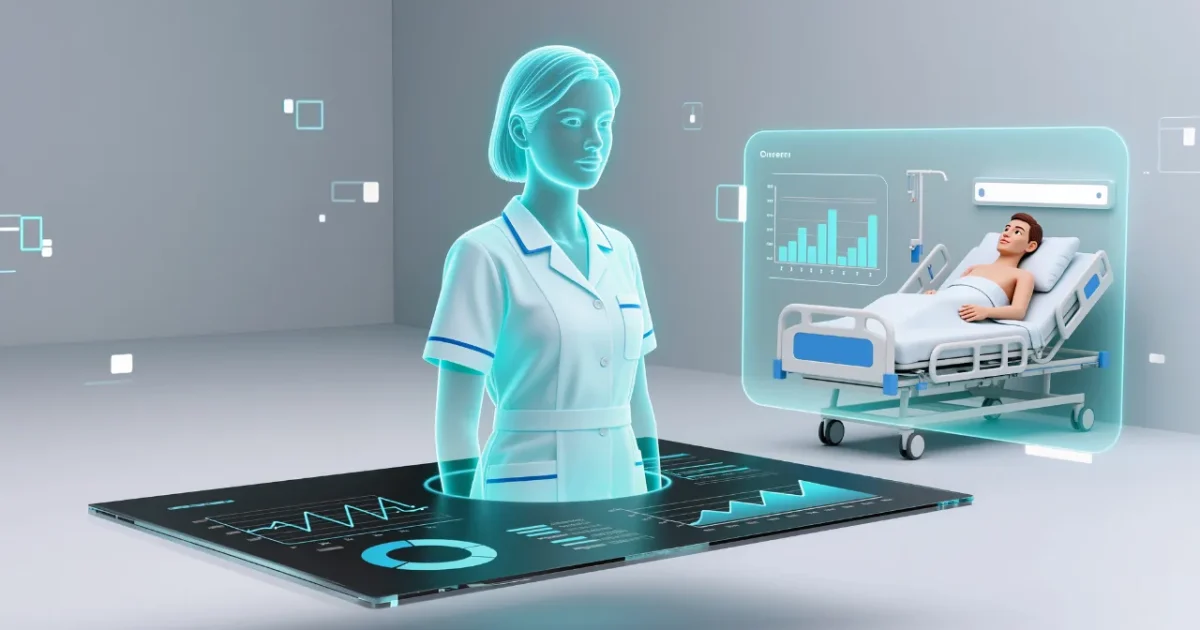

Hospitals are busy places. As a hospital administrator or clinical department head, you juggle patient outcomes, tight budgets, and quality care daily. The benefits of AI in patient care can ease these struggles, transforming how hospitals work. From faster diagnoses to safer environments, AI is changing healthcare for the better.
What Are the Benefits of AI in Patient Care?
AI, or artificial intelligence, uses smart computer systems to analyze data and make decisions. In healthcare, it’s like a super-smart assistant that helps doctors and nurses work faster and better. The benefits of AI in patient care include quicker services, better treatments, and lower costs. Let’s explore seven ways AI is revolutionizing healthcare.
1. Faster Patient Service with AI
AI makes hospitals run smoother. It can sort through patient records, schedule appointments, and even predict wait times. This means patients spend less time waiting and more time getting care.
For example, AI chatbots like those used by Cleveland Clinic answer patient questions 24/7. They handle simple tasks like booking appointments, freeing up staff for more complex work.
AI-driven scheduling systems have reduced patient wait times by up to 30% in some hospitals.
— McKinsey & Company, 2024 Healthcare Technology Report
2. Improved Treatment Quality Through AI
AI helps doctors make better decisions. It analyzes patient data, like medical history or test results, to suggest the best treatments. This leads to improved treatment quality for patients.
For instance, IBM Watson Health uses AI to recommend personalized cancer treatments. It looks at a patient’s unique data and suggests therapies that doctors might not have considered.
3. Enhanced Hospital Safety with AI
Hospitals can be risky places, but AI improves safety. It can predict problems before they happen, like spotting patients at risk of serious conditions. This is one of the top AI healthcare advantages.
Take sepsis, a life-threatening infection. AI tools like those from Epic Systems analyze vital signs to predict sepsis risk hours before symptoms appear, allowing early treatment.
“AI has reduced sepsis-related deaths by 20% in hospitals using predictive analytics.”
— American Medical Association, 2025 Study on AI in Healthcare
4. Cost-Effective Healthcare AI Solutions
Running a hospital is expensive. AI cuts costs by automating tasks and reducing errors. This makes healthcare more affordable for everyone, a key part of cost-effective healthcare AI.
For example, AI-powered imaging tools from GE Healthcare can spot issues in X-rays faster than humans, reducing the need for costly retests.
5. Streamlined Clinical Efficiency
AI boosts AI for clinical efficiency by automating repetitive tasks. This lets doctors and nurses focus on patients, not paperwork. For example, AI can transcribe doctor-patient conversations, saving hours of documentation time.
Hospitals using Nuance’s AI transcription tools report doctors spending 40% less time on paperwork, giving them more time for patient care.
“AI transcription has transformed how clinicians manage their time, improving both efficiency and patient satisfaction.”
— Dr. Sarah Thompson, Chief of Staff at Mayo Clinic, 2025
6. Personalized Patient Care with AI
AI makes treatments personal. By analyzing data like genetics or lifestyle, it creates custom care plans. This is a major part of artificial intelligence for patients.
For example, Google Health’s AI predicts how diabetes patients will respond to certain medications, helping doctors pick the best option for each person.
7. Better Diagnosis Accuracy
AI catches things humans might miss. It analyzes scans, blood tests, and more to spot diseases early. This leads to faster, more accurate diagnoses, a key AI healthcare advantage.
For instance, Stanford University’s AI tool detects skin cancer from images with 95% accuracy, matching top dermatologists.
“AI’s ability to detect diseases early is a game-changer for patient outcomes.”
— Dr. John Lee, Stanford Medical Center, 2025
Choosing the Right AI Tool for Your Hospital
| Tool Name | Key Feature | Best For | Price | ROI | Cons/Issues |
|---|---|---|---|---|---|
| IBM Watson Health | Personalized treatment plans | Oncology departments | $10,000+/month | High, reduces misdiagnosis | Complex setup |
| Epic Systems AI | Sepsis prediction | Critical care units | $5,000+/month | High, saves lives | Requires staff training |
| Nuance Transcription | Automated clinical documentation | Busy outpatient clinics | $2,000+/month | Medium, saves time | Limited to documentation tasks |
| GE Healthcare AI | Advanced imaging analysis | Radiology departments | $8,000+/month | High, reduces retests | Expensive initial investment |
How to Start Using AI in Your Hospital
- Assess Needs: Identify areas like diagnostics or scheduling where AI can help.
- Choose a Tool: Pick an AI tool based on your hospital’s size and budget.
- Train Staff: Teach your team how to use the AI system effectively.
- Start Small: Test AI in one department, like radiology, before expanding.
- Monitor Results: Track improvements in speed, cost, or patient outcomes.
AI Adoption in U.S. Hospitals (2025)
Here’s how AI adoption has grown in U.S. hospitals, based on data from the American Medical Association (2025).
Looking Ahead: The Future of AI in Patient Care
The benefits of AI in patient care are just the start. As AI grows smarter, it will predict diseases even earlier, cut costs further, and make hospitals safer. By adopting AI for clinical efficiency and cost-effective healthcare AI, your hospital can lead the way. Download our “Is Your Clinic Ready to Realize These AI Benefits?” checklist to assess your readiness.
Frequently Asked Questions (FAQs)
How Does AI Improve Treatment Quality?
AI analyzes patient data to suggest precise treatments. For example, it can recommend the best chemotherapy for a cancer patient based on their genetic profile, improving outcomes.
Is AI in Healthcare Safe?
Yes, AI enhances safety by predicting risks like infections. Tools like Epic’s sepsis predictor catch issues early, saving lives.
Can AI Really Save Hospitals Money?
Absolutely. AI reduces errors and automates tasks like imaging analysis, cutting costs on retests and staff time.
What’s the Easiest Way to Start Using AI?
Start with a simple tool like an AI chatbot for scheduling. It’s affordable and easy to implement, with quick results.