AI Claims Processing in Insurance: How It Works (2026)
Learn how AI speeds up insurance claims from weeks to minutes. Explore fraud detection, damage assessment, and top platforms like Tractable, Shift Technology, and Snapsheet.
AI reduces average claims processing time from 15 days to under 3 days, with simple claims settled in minutes.
Tractable's computer vision assesses vehicle damage from photos with 94% accuracy, matching human adjusters.
Shift Technology's fraud detection AI identifies suspicious claims 75% faster than manual review, saving insurers $4.7 billion annually.
Snapsheet processes over 100,000 auto claims per month using AI-powered virtual inspections, eliminating in-person visits.
Insurers using AI claims automation report a 40% reduction in operational costs and a 22-point increase in customer satisfaction scores.
Filing an insurance claim has always been painful. You report damage, wait for an adjuster, submit paperwork, and then wait some more. Weeks can pass before you see a payout. AI is changing that entire experience.
Insurance companies now use artificial intelligence to review claims, assess damage from photos, detect fraud, and issue payments—often in hours instead of weeks. The technology is already processing millions of claims per year.
This guide explains how AI claims processing works, which platforms lead the market, and what it means for you as a policyholder. For the broader insurtech picture, see our Complete AI Insurtech Guide.
How AI Claims Processing Works
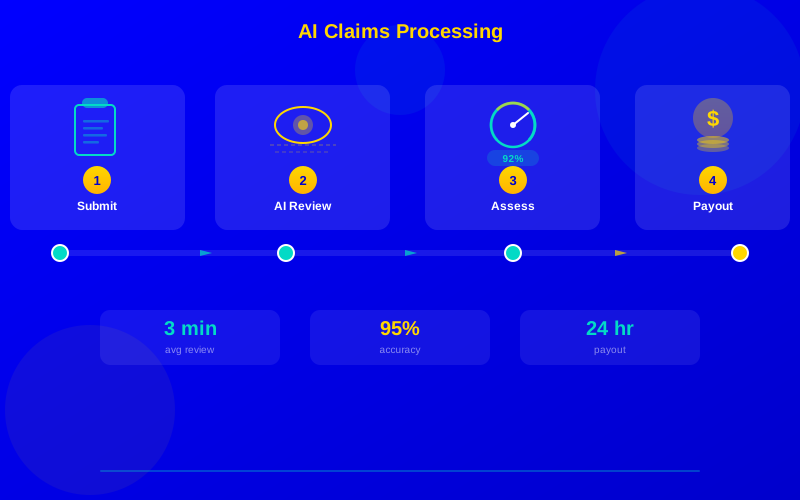
AI claims processing combines several technologies into a single workflow. Each handles a different part of the process that used to require separate human teams.
Computer vision analyzes photos of damage. Upload pictures of your dented car or flood-damaged kitchen, and AI identifies the damage type, severity, and estimated repair cost. Tractable's models have been trained on millions of damage photos.
Natural language processing reads claim descriptions, police reports, and medical records. It extracts key facts—what happened, when, where—and matches them against policy terms automatically.
Predictive models estimate repair costs, detect anomalies, and route claims to the right handler. Simple claims get auto-approved. Complex ones go to senior adjusters with AI-prepared summaries.
AI compresses the claims pipeline from weeks to days—or minutes for simple cases.
Top AI Claims Processing Platforms
These are the companies leading the AI claims revolution. Each specializes in a different part of the claims workflow.
Tractable
Tractable is the leader in AI-powered damage assessment. Its computer vision models analyze photos of vehicle damage and produce repair estimates within seconds. The AI has been trained on millions of real claims images.
Insurance carriers like Tokio Marine, Ageas, and Covéa use Tractable for auto claims. The system achieves 94% accuracy compared to human adjusters—but works in seconds instead of days. Tractable processes claims in over 20 countries and handles all vehicle types.
Shift Technology
Shift Technology focuses on fraud detection and claims automation. Its AI analyzes every incoming claim against patterns from millions of historical claims. Suspicious signals—inconsistent dates, linked claimants, staged accident indicators—get flagged instantly.
The platform processes claims across auto, property, health, and workers' compensation. Shift reports that its AI identifies fraudulent claims 75% faster than manual review. Over 100 insurers worldwide rely on Shift, including top-20 global carriers.
Snapsheet
Snapsheet pioneered virtual claims processing. Policyholders photograph damage with their smartphone, and AI handles the appraisal virtually. No waiting for an adjuster to drive to your location. No scheduling hassles.
Snapsheet processes over 100,000 auto claims per month. The platform integrates AI estimation with a network of repair shops. Carriers using Snapsheet report 40% lower claims costs and settlement times under 48 hours for standard auto claims.
Platform
Specialty
Accuracy
Speed Gain
Used By
Tractable
Damage assessment (auto)
94%
Days → seconds
Tokio Marine, Ageas
Shift Technology
Fraud detection
75% faster detection
Weeks → hours
100+ global insurers
Snapsheet
Virtual appraisals
Matches adjusters
Days → 48 hours
100K+ claims/month
Lemonade AI
Full-stack automation
High (renters, pet)
Weeks → 3 seconds
2M+ customers
Hi Marley
AI communication
N/A
30% faster resolution
Top P&C carriers
AI Fraud Detection in Claims
Insurance fraud costs the industry an estimated $80 billion per year in the US alone. AI is the most effective weapon against it. Traditional fraud detection relied on rules—"flag any claim over $10,000." AI goes far deeper.
Machine learning models analyze hundreds of variables per claim. They detect organized fraud rings by mapping relationships between claimants, providers, and repair shops. They flag staged accidents by comparing damage patterns against physics models.
Shift Technology reports that AI-flagged claims have a fraud confirmation rate 3 times higher than manually flagged ones. The AI also learns continuously. Every confirmed fraud case makes the model smarter. For a deeper look at how AI evaluates risk before claims even happen, explore AI Underwriting Tools for 2026.
AI Damage Assessment
Photographing damage and uploading it to an app sounds simple. The AI behind it is anything but. Computer vision models must identify scratches versus dents, estimate depth and size, determine which parts need replacement versus repair, and calculate labor hours.
Tractable's models have been trained on over 100 million damage images. They recognize damage on any vehicle make and model. The AI breaks down the repair into line items—just like a human estimator—but does it in seconds instead of hours.
For property claims, aerial imagery comes into play. After storms, drones and satellite photos feed into AI systems from Cape Analytics and Nearmap. These platforms assess roof damage across thousands of homes simultaneously. One hurricane season can generate hundreds of thousands of property claims. AI makes it possible to triage them all within days.
AI claims processing delivers measurable improvements across speed, cost, fraud detection, and satisfaction.
What Policyholders Actually Experience
As a policyholder, the AI shift means a smoother claims process. Modern AI-powered carriers like Lemonade and Root let you file claims entirely through a mobile app. You describe what happened, snap photos, and the AI takes over.
For auto claims, you can get a damage estimate within minutes of photographing your car. No waiting for an adjuster appointment. No back-and-forth over repair shop choices. The AI lists approved shops, estimated costs, and your out-of-pocket amount—all in one screen.
Communication improves too. Hi Marley's AI-powered texting platform keeps policyholders updated throughout the process. Instead of calling and sitting on hold, you get text updates as your claim moves through each stage.
Challenges and Limitations
AI claims processing is not perfect. Complex claims involving injuries, liability disputes, or multiple parties still need human judgment. AI struggles with ambiguous situations where fault is unclear or damage is hard to categorize from photos alone.
Bias is a concern too. If training data reflects historical biases—claims denied more often in certain zip codes, for example—the AI may perpetuate those patterns. Leading platforms conduct regular bias audits, but the industry needs stronger standards.
Transparency matters. Policyholders deserve to know when AI makes the decision versus a human. Regulations in several states now require insurers to disclose AI involvement in claims decisions. Expect more regulation as AI claims processing becomes the norm.
The Future of AI Claims Processing
The next frontier is proactive claims. Imagine your connected car reports an accident before you even call. IoT sensors in your home detect a burst pipe and file a water damage claim automatically. AI processes the claim while repair crews are already en route.
Parametric insurance is expanding too. Instead of proving damage, coverage triggers automatically based on measurable events—wind speed, earthquake magnitude, flight delays. AI monitors these triggers and pays out instantly with no filing required.
The claims experience of 2030 will look nothing like today. For the full picture of how AI is reshaping insurance from underwriting to claims to customer service, the technology is transforming every step of the process. And as AI underwriting gets smarter, the entire insurance lifecycle—from application to payout—will run on intelligent automation.
Written by Amina Usman(Health & Legal Tech Writer)
AI claims processing starts when you file a claim—usually through a mobile app. You upload photos, documents, and a description. Computer vision AI analyzes the images to assess damage. Natural language processing reads your description and supporting documents. The AI cross-references policy details, coverage limits, and deductibles. It then calculates the payout and either approves the claim automatically or flags it for human review if the case is complex.